Japanese Kamikaze Operations
You Only Live TwiceJapanese kamikaze operations are recalled by Tiger Tanaka as a response to Japan’s worsening wartime position and as an extraordinary form of self-sacrificial attack. His account moves from a distant intelligence officer’s growing sense of national danger to the mechanics and spectacle of the assaults, then ends with an unresolved contradiction: Tiger recognizes the thousands of young men lost while still imagining that he might have wanted to die in an attack himself.
A distant observer drawn toward the war
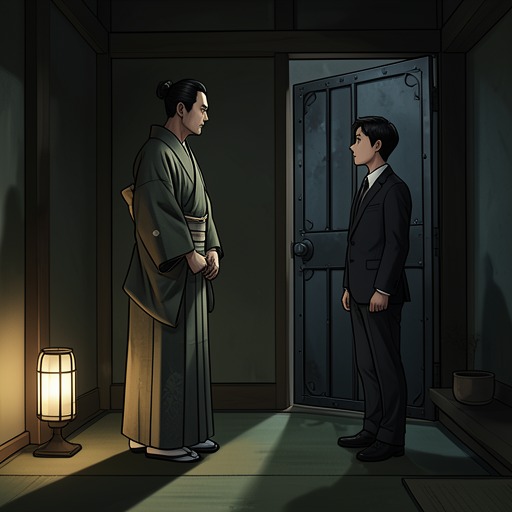
Tiger tells the story privately to James Bond, who has asked him about the kamikaze. The recollection begins nearly twenty years earlier, when Tiger was doing intelligence work in Berlin and Rome. He was far from air raids and farther still from the front, but listened each night to radio reports of American forces advancing toward Japan, island by island and airstrip by airstrip. He rejected the false news broadcast by the Nazis and concentrated instead on the danger to his country and the feeling that it needed him. The distance between his posting and the fighting matters: the account presents enlistment not as an immediate battlefield response, but as a decision formed through repeated news of defeat and a growing conviction that he should return.
Tiger remembers that ordinary pleasures lost their appeal. He describes wine turning sour and the women in his bed seeming cold as reports of the kamikaze reached him. He understood the name as the Divine Wind that, in the thirteenth century, had destroyed Kublai Khan’s fleet and saved Japan from invasion. The historical association gave a new wartime tactic an older national resonance. To Tiger, it seemed a way to die without medals, through a suicide that would impose enormous cost on the enemy. Nearly forty, and believing he had already lived fully, he thought he could take the place of a younger man.
Joining the force and its machinery
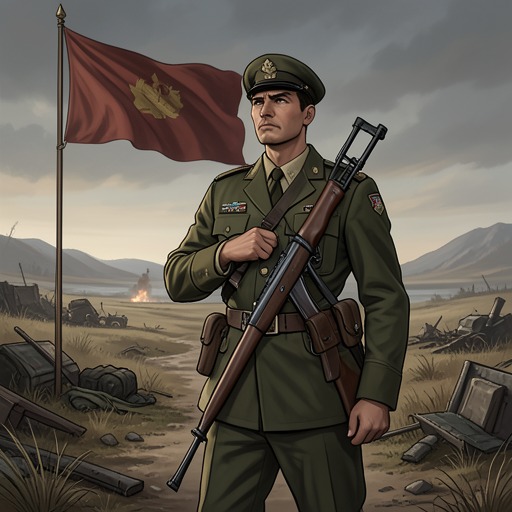
Tiger says he forced the Kempeitai to accept his resignation, returned to Japan, and more or less bribed his way into a kamikaze training squadron. Entry was difficult, he recalls, because young men throughout the nation seemed eager to serve the Emperor in this way. His account therefore sets his own age and prior intelligence service against a recruitment pool he portrays as dominated by youth. His willingness to substitute himself for a younger pilot was personal, but the squadron belonged to a much wider mobilization.
Shortages of aircraft changed what the force could use. Tiger describes the baku, a small plane made mostly of wood, carrying a thousand pounds of explosives in its nose. It had no engine of its own: a fighter-bomber released it from beneath its belly, and its pilot steered with a single joystick. This material improvisation gives the attack a stark physical form. The pilot was not merely directing an ordinary aircraft toward a target; in Tiger’s description, the craft itself was a flying bomb, with the person inside it committed to a one-way course.
The attack and its human cost
Tiger explains the intended method as a concentrated strike against a carrier’s vulnerable flight deck and lift, the machinery at the heart of its operations. He says the bridge and waterline were heavily armored and should not be the aim; the pilot was to line up over the ship and dive at the flight deck. Fighter escorts led the attack, while the target might be an aircraft carrier bringing planes toward the islands and Japan. The account’s tactical detail makes the sacrifice purposeful rather than indiscriminate in Tiger’s explanation: the pilot was meant to destroy a strategically valuable part of the enemy’s fighting capacity.
Yet Tiger’s most vivid recollection is not a diagram of the target but the departure of the young men. He remembers them in pure white shifts, wearing the ancient white scarf associated with the samurai, running joyfully toward their aircraft as if embracing a loved one. He recalls the roar of the mother planes and the launches into dawn or the setting sun, toward targets reported by spies or intercepted on the radio. The image of flight toward ancestors in heaven is immediately joined to its consequence: in Tiger’s account, none returned or was captured. The beauty of the scene does not soften its finality; it makes the young men’s willing procession toward death more visible.
Results and Tiger’s unresolved judgment
Tiger does not present the operations as a simple military success. He says the attacks frightened the American and British fleets, but asks whether that result justified losing thousands of Japan’s best young men. His own answer is divided. He calls the kamikaze one of the most glorious pages in Japan’s history and cites a striking discrepancy: the unit claimed 276 naval craft sunk or damaged, while the actual number, he says, was 322. In his telling, the force was unusual because its claims fell below its results, not above them. That numerical comparison supports his account of effectiveness, but it does not settle the question he has just raised about the human price.
James Bond observes that Tiger was fortunate the surrender came before he was sent on a mission. Tiger allows that possibility, then admits that one of his most cherished dreams is still to dive from the sun through antiaircraft fire at a carrier. He imagines terrified figures running from the flight deck and the destruction of a hundred or more enemies and a million pounds’ worth of military equipment by one pilot. The conclusion does not resolve the tension between his grief for the dead and his attraction to their sacrifice. Instead, Tiger’s present-day fantasy returns the remembered operation to the personal choice that began his story: though he never describes flying a mission, he continues to imagine the death he once thought he could offer.